
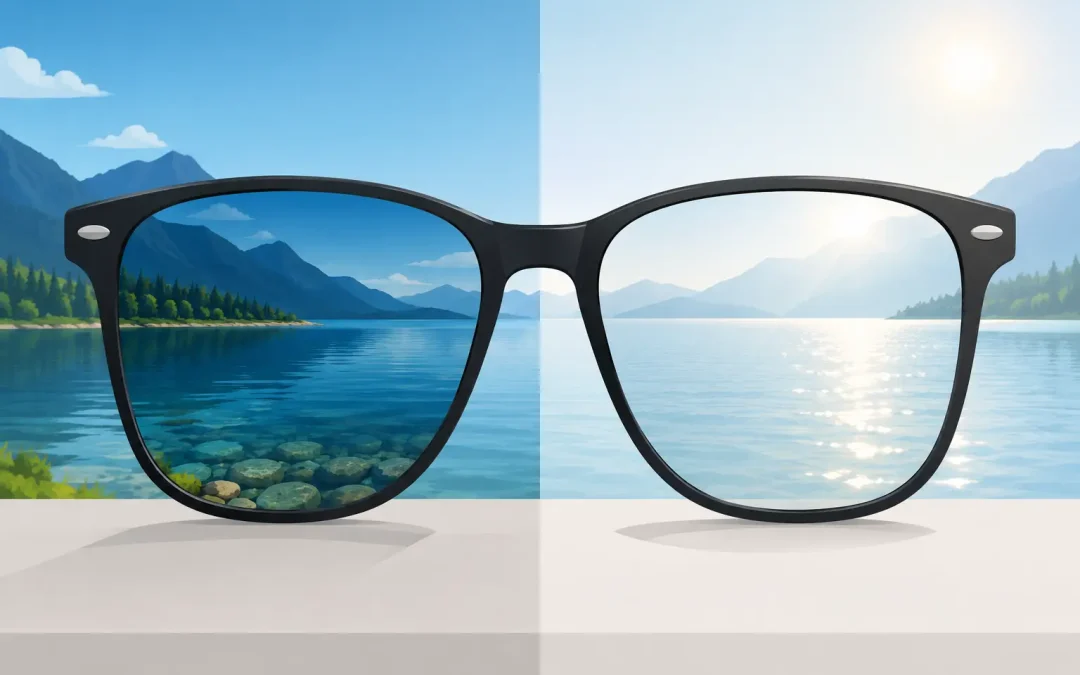
A bright afternoon drive can turn a windshield, hood, and wet pavement into one big sheet of glare. That is where the choice between polarized lenses or regular lenses becomes more than a style detail. Both can complete an outfit and protect your eyes when they offer proper UV coverage, but they create a very different view of the world.
For beach days, road trips, city walks, fishing weekends, and outdoor workouts, the right lens can make colors feel more comfortable to look at and help you keep your focus. The better pick depends on where you wear your sunglasses most, not on whether one option is universally better.
Polarized Lenses or Regular Lenses: The Key Difference
Regular sunglass lenses reduce the amount of visible light reaching your eyes. Think of them as shade for a sunny day. A darker tint can make conditions feel more comfortable, and a quality pair with 100% UVA and UVB protection helps shield your eyes from ultraviolet rays.
Polarized lenses do that job while adding a special filter designed to cut reflected glare. Light bouncing off flat surfaces tends to travel in a horizontal direction. Polarization filters much of that reflected light, which is why the road, water, snow, car hoods, and even pale sidewalks can look less harsh through polarized sunglasses.
The result is often a clearer, more relaxed view in strong sun. Details on the road may be easier to see. Water can look less shiny, and outdoor scenes can appear richer because you are not squinting through a wall of reflected brightness.
Here is the part shoppers sometimes miss: polarization and UV protection are not the same feature. A lens can be polarized, but you should still look for clear UV protection information. Likewise, a regular lens can provide excellent UV protection even without polarization. For everyday eye safety, make UV coverage non-negotiable. For glare control, decide whether polarization suits your routine.
When Polarized Sunglasses Are Worth It
Polarized lenses shine when glare is part of the plan. If you regularly drive in sunshine, spend weekends near water, or exercise outdoors, they can be an easy upgrade in comfort.
Driving with less reflected glare
On a clear day, sunlight reflecting off traffic, windshields, lane markings, and pavement can be distracting. Polarized driving sunglasses reduce that reflected glare, helping the road look more defined and easing the urge to squint. They are especially appealing for long commutes, open highways, and trips where the sun sits low in the sky.
Frame fit matters here, too. A comfortable pair that stays in place is safer and more useful than a great lens you keep pushing back up your nose. Look for a shape that feels secure without squeezing at the temples, whether your style is classic aviator, bold square, or sporty wraparound.
Water, beach, and fishing days
Water throws light back at your eyes from every angle. Polarized lenses cut much of that surface glare, so you can enjoy a calmer view from the shore, a boat, or a poolside chair. Anglers also often prefer them because reducing the shine on water can make it easier to spot movement and see beneath the surface in the right conditions.
For a beach outfit, there is no need to choose function over style. Oversized fashion frames, colorful sunglasses, and classic rectangular shapes can all come with polarized lenses. Pick the color and silhouette that makes you want to wear them, then let the lens technology handle the glare.
Sports and outdoor activity
Cycling, running, hiking, and field sports put you in direct sun for long stretches. Polarized lenses can make reflective paths, parked cars, and open terrain feel easier on the eyes. Sport-oriented frames with more coverage may also help limit light entering around the sides.
That said, personal preference counts. Some athletes want every visual cue from a screen or instrument visible at a glance, so testing your sunglasses during the activities you actually do is smart.
When Regular Lenses Make More Sense
Regular lenses are not the lesser option. They are a strong choice for casual wear, variable-light days, and anyone building a sunglasses collection around different colors and looks.
A regular UV-protective lens can be exactly what you need for brunch, errands, festivals, city afternoons, and travel. It softens bright light, completes your outfit, and offers dependable sun protection when the lens is labeled for full UVA and UVB coverage. If heavy reflected glare is not a daily problem, you may not notice enough added benefit from polarization to make it your priority.
Regular lenses can also be more convenient when you rely on certain digital displays. Polarized lenses may make LCD screens on some cars, cameras, watches, phones, and equipment look dim or show odd color shifts when viewed at an angle. This does not happen with every display or every pair, but it is a real trade-off for pilots, photographers, frequent device users, and drivers who depend on an older dashboard screen.
For low-light or nighttime driving, neither dark polarized lenses nor regular dark sunglasses are the answer. Dark lenses reduce light, which can make it harder to see after sunset. Choose clear lenses or eyewear designed for the conditions instead, and never rely on sunglasses to solve poor nighttime visibility.
How Lens Color Changes the Experience
Polarization controls glare. Lens color changes the mood and visual feel. You can choose both based on your style and where you wear your sunglasses.
Gray lenses are a versatile favorite because they reduce brightness while keeping colors relatively natural. They work beautifully for daily wear, driving, and sunny vacations. Brown and amber lenses can boost contrast for some people, making them popular for outdoor activities and changing light. Green lenses offer a balanced, classic look, while mirrored finishes add a sharp, athletic edge and help limit visible light at the lens surface.
Fashion shades like pink, blue, yellow, or gradient lenses can make a statement, but they should still be paired with reliable UV protection. A light tint may feel comfortable on an overcast day, while a darker lens can feel better under intense sun. Do not use darkness alone as proof of protection. A dark lens without adequate UV filtering can cause your pupils to open wider while UV exposure remains a concern.
Choose Based on Your Real Routine
The fastest way to decide is to picture where your sunglasses spend the most time. Polarized lenses are usually the better match if glare follows you from the driver’s seat to the beach, trail, or water. Regular lenses are a confident choice if you want straightforward UV coverage, everyday shade, and maximum ease with digital screens.
Consider these four everyday scenarios before you choose:
- Daily driving and road trips: Polarized lenses are often more comfortable because they reduce glare from pavement and vehicles.
- Beach, boating, and fishing: Polarized lenses are a natural fit for reflected light off water and sand.
- City style and casual wear: Either option works well, as long as the lenses provide UVA and UVB protection and the frame feels great.
- Screens, dashboards, and camera gear: Regular lenses may be easier if display visibility is a frequent concern.
You do not have to own just one type. A polarized pair for bright outdoor plans and a regular UV-protective pair for fashion-first, screen-heavy days gives you flexibility without overthinking every forecast.
Fit and Protection Matter as Much as Lens Type
The best sunglasses are the pair you will actually wear. That starts with a frame that suits your face, feels comfortable behind the ears, and gives enough coverage for your lifestyle. Large frames can offer more protection from sunlight entering at the sides, while narrower rectangular shapes deliver a clean, modern look. Aviators bring an easy classic feel, and sporty frames are built for movement.
For kids, fit is especially important. Choose lightweight sunglasses that stay put during play, provide full UV protection, and feel fun enough that they will not be left in the car. Bright colors and favorite shapes can turn sun protection into something children are happy to wear.
At Kooleyes, the goal is simple: help you find sunglasses that look sharp, feel comfortable, and make bright days easier to enjoy. Whether you choose polarized lenses for serious glare control or regular lenses for easy everyday style, make UV protection your baseline and choose a frame that fits your life. The right pair should make you feel ready to step outside, not ready to fuss with your eyewear.


