Select Page

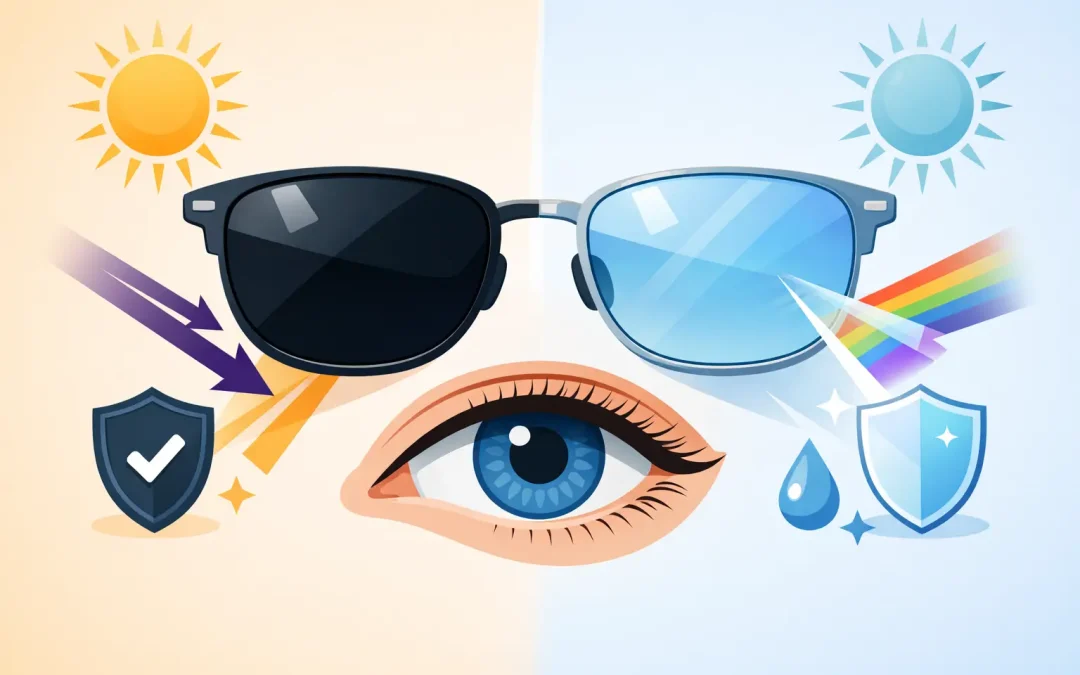
A nearly black lens can make a bright beach, highway, or city sidewalk feel instantly more comfortable. But are dark lenses safer? Not automatically. Lens darkness reduces the amount of visible light reaching your eyes, which can make squinting less likely. Real sun safety, however, comes from verified UV protection – not from how dark the lens looks.

That distinction matters when you are shopping for sunglasses that look sharp and work hard. The best pair combines the right level of tint for your activity with UV-blocking protection, a comfortable fit, and, when glare is an issue, polarized lenses.

Are Dark Lenses Safer Than Light Lenses?

Dark lenses can feel safer because they make the scene in front of you look dimmer. On a cloudless day, that extra shade can improve comfort and help you see more easily. But darkness alone does not tell you whether a lens blocks harmful ultraviolet rays.

A dark lens without UV protection may actually create a bigger concern than a lighter lens with proper UV protection. In dimmer conditions, your pupils can open wider. If the lens is not blocking UVA and UVB rays, more UV exposure may reach the eye. That is why a fashion tint should never be mistaken for sun protection.

Look for sunglasses labeled UV400 or 100% UVA/UVB protection. UV400 means the lenses are designed to block ultraviolet rays up to 400 nanometers, covering both UVA and UVB. This is the feature that matters whether you prefer smoky black, soft brown, mirrored blue, or a lighter gradient lens.

Lens darkness still has a purpose. A dark gray or dark brown tint can be especially comfortable in intense sunlight at the beach, on open water, in the mountains, or during long outdoor days. The key is pairing that tint with dependable UV protection.

What Dark Lenses Actually Do

Think of tint as brightness control. It manages visible light, while UV protection manages ultraviolet radiation you cannot see. Both can improve your time outdoors, but they do different jobs.

A darker tint can reduce eye strain caused by intense visible light and help you relax your eyes when the sun is high. Gray lenses are popular because they reduce brightness while keeping colors looking natural. Brown and amber lenses can increase contrast, which many people enjoy for driving, hiking, golf, and changing light conditions.

Very dark lenses are not the best answer for every setting. If you are walking from bright sun into a shaded street, reading a dashboard, or riding a bike through tree cover, a lens that is too dark may make details harder to see. For driving near sunset, a medium tint is often more practical than an extra-dark one. Night driving is different altogether: dark sunglasses should not be worn at night, even if they are marketed for daytime glare control.

UV Protection Is the Non-Negotiable Feature

Sun exposure is not limited to hot summer afternoons. UV rays can reach your eyes on cold, bright winter days, through light cloud cover, and when sunlight reflects off water, snow, sand, and pavement. You may not feel the exposure, but your eyes still need protection.

When comparing sunglasses, make UV protection your first check. A good everyday pair should clearly state 100% UV protection or UV400. Do not judge protection by lens color, price, or a mirror finish. A pale lens can offer excellent UV protection, and a very dark lens can offer little if the manufacturer has not built in the right filter.

For families, this is especially worth remembering. Children spend plenty of time outdoors, and they need real UV protection just as much as adults do. Choose kids’ sunglasses that fit securely, feel light enough for play, and include clear UV400 protection. A fun color or cool frame shape is a bonus, not a substitute.

Polarized Lenses Add a Different Kind of Comfort

Polarization is another feature that shoppers often confuse with UV protection. Polarized lenses are designed to cut reflected glare from flat surfaces, such as roads, water, wet pavement, car hoods, and snow. That can make a noticeable difference when driving, fishing, cycling, or spending the day near the water.

A polarized lens can make the road look clearer and help reduce the blinding flash that hits when sunlight reflects off a windshield or pavement. It can also make it easier to see into water by reducing surface glare. Polarization does not replace UV protection, though. The most useful combination for everyday outdoor wear is polarized lenses with UV400 protection.

There are a few situations where polarization is not every shopper’s top priority. Some digital displays can look darker or show rainbow-like patterns through polarized lenses, depending on the screen angle. Pilots may also have specific eyewear needs. For most road trips, beach days, and outdoor workouts, however, polarization is a smart comfort upgrade.

Choose Lens Color for How You Spend Your Day

The best lens color depends on your usual setting, style, and sensitivity to brightness. There is no single shade that wins for everyone.

Gray lenses are a versatile choice for daily wear. They are ideal when you want a true-to-life view of colors while reducing harsh brightness. They also pair easily with nearly any frame, from classic aviators to bold square sunglasses.

Brown, bronze, and amber lenses can make contrast feel stronger, which is useful for active days and variable conditions. They bring a warmer look that works well with retro styles and outdoor-ready frames.

Green lenses offer a balanced view that can feel comfortable in mixed conditions, while mirrored lenses can add extra visible-light reduction and a high-impact style finish. A mirror coating does not automatically mean UV protection, so check the product details before buying.

Gradient lenses, which are darker at the top and lighter at the bottom, can be a stylish choice for city wear and driving in moderate sun. They shade the upper field of vision while leaving the lower area a little brighter. Just make sure the full lens provides UV protection, not only the darker section.

Fit and Coverage Matter More Than Most People Think

Even a great lens cannot protect areas it does not cover. Sunglasses that sit too far down your nose, slide during movement, or leave large gaps at the sides allow more sunlight to reach around the frame.

For strong sun, larger lenses and wraparound-inspired shapes offer more coverage. They are a practical pick for cycling, running, boating, and long days at the beach. If you love a smaller retro frame, wear it when the style suits the moment, but consider a more protective shape for high-glare activities.

Comfort helps protection work better, too. When frames pinch, bounce, or feel heavy, you are more likely to take them off. Look for a fit that stays secure at your temples and nose without pressure. The right sunglasses should feel like part of your look, not something you cannot wait to remove.

A Simple Way to Shop Smarter

Start with UV400 or 100% UVA/UVB protection. Next, choose the tint level that fits your daylight conditions. Add polarization if glare from roads, water, or outdoor surfaces is part of your routine. Then pick a frame with coverage and a shape you will genuinely want to wear.

That approach keeps the decision simple. You do not have to choose between style and smart protection. A sleek black rectangular frame, colorful cat-eye, sport wrap, or classic aviator can all be a strong choice when the lenses have the right protective features.

The next time a dark lens catches your eye, enjoy the look – then check what is behind the tint. The pair you reach for most often should make bright days feel easier, keep UV protection front and center, and let you shade your world in style.
A nearly black lens can make a bright beach, highway, or city sidewalk feel instantly more comfortable. But are dark lenses safer? Not automatically. Lens darkness reduces the amount of visible light reaching your eyes, which can make squinting less likely. Real sun safety, however, comes from verified UV protection – not from how dark the lens looks.

That distinction matters when you are shopping for sunglasses that look sharp and work hard. The best pair combines the right level of tint for your activity with UV-blocking protection, a comfortable fit, and, when glare is an issue, polarized lenses.

Are Dark Lenses Safer Than Light Lenses?

Dark lenses can feel safer because they make the scene in front of you look dimmer. On a cloudless day, that extra shade can improve comfort and help you see more easily. But darkness alone does not tell you whether a lens blocks harmful ultraviolet rays.

A dark lens without UV protection may actually create a bigger concern than a lighter lens with proper UV protection. In dimmer conditions, your pupils can open wider. If the lens is not blocking UVA and UVB rays, more UV exposure may reach the eye. That is why a fashion tint should never be mistaken for sun protection.

Look for sunglasses labeled UV400 or 100% UVA/UVB protection. UV400 means the lenses are designed to block ultraviolet rays up to 400 nanometers, covering both UVA and UVB. This is the feature that matters whether you prefer smoky black, soft brown, mirrored blue, or a lighter gradient lens.

Lens darkness still has a purpose. A dark gray or dark brown tint can be especially comfortable in intense sunlight at the beach, on open water, in the mountains, or during long outdoor days. The key is pairing that tint with dependable UV protection.

What Dark Lenses Actually Do

Think of tint as brightness control. It manages visible light, while UV protection manages ultraviolet radiation you cannot see. Both can improve your time outdoors, but they do different jobs.

A darker tint can reduce eye strain caused by intense visible light and help you relax your eyes when the sun is high. Gray lenses are popular because they reduce brightness while keeping colors looking natural. Brown and amber lenses can increase contrast, which many people enjoy for driving, hiking, golf, and changing light conditions.

Very dark lenses are not the best answer for every setting. If you are walking from bright sun into a shaded street, reading a dashboard, or riding a bike through tree cover, a lens that is too dark may make details harder to see. For driving near sunset, a medium tint is often more practical than an extra-dark one. Night driving is different altogether: dark sunglasses should not be worn at night, even if they are marketed for daytime glare control.

UV Protection Is the Non-Negotiable Feature

Sun exposure is not limited to hot summer afternoons. UV rays can reach your eyes on cold, bright winter days, through light cloud cover, and when sunlight reflects off water, snow, sand, and pavement. You may not feel the exposure, but your eyes still need protection.

When comparing sunglasses, make UV protection your first check. A good everyday pair should clearly state 100% UV protection or UV400. Do not judge protection by lens color, price, or a mirror finish. A pale lens can offer excellent UV protection, and a very dark lens can offer little if the manufacturer has not built in the right filter.

For families, this is especially worth remembering. Children spend plenty of time outdoors, and they need real UV protection just as much as adults do. Choose kids’ sunglasses that fit securely, feel light enough for play, and include clear UV400 protection. A fun color or cool frame shape is a bonus, not a substitute.

Polarized Lenses Add a Different Kind of Comfort

Polarization is another feature that shoppers often confuse with UV protection. Polarized lenses are designed to cut reflected glare from flat surfaces, such as roads, water, wet pavement, car hoods, and snow. That can make a noticeable difference when driving, fishing, cycling, or spending the day near the water.

A polarized lens can make the road look clearer and help reduce the blinding flash that hits when sunlight reflects off a windshield or pavement. It can also make it easier to see into water by reducing surface glare. Polarization does not replace UV protection, though. The most useful combination for everyday outdoor wear is polarized lenses with UV400 protection.

There are a few situations where polarization is not every shopper’s top priority. Some digital displays can look darker or show rainbow-like patterns through polarized lenses, depending on the screen angle. Pilots may also have specific eyewear needs. For most road trips, beach days, and outdoor workouts, however, polarization is a smart comfort upgrade.

Choose Lens Color for How You Spend Your Day

The best lens color depends on your usual setting, style, and sensitivity to brightness. There is no single shade that wins for everyone.

Gray lenses are a versatile choice for daily wear. They are ideal when you want a true-to-life view of colors while reducing harsh brightness. They also pair easily with nearly any frame, from classic aviators to bold square sunglasses.

Brown, bronze, and amber lenses can make contrast feel stronger, which is useful for active days and variable conditions. They bring a warmer look that works well with retro styles and outdoor-ready frames.

Green lenses offer a balanced view that can feel comfortable in mixed conditions, while mirrored lenses can add extra visible-light reduction and a high-impact style finish. A mirror coating does not automatically mean UV protection, so check the product details before buying.

Gradient lenses, which are darker at the top and lighter at the bottom, can be a stylish choice for city wear and driving in moderate sun. They shade the upper field of vision while leaving the lower area a little brighter. Just make sure the full lens provides UV protection, not only the darker section.

Fit and Coverage Matter More Than Most People Think

Even a great lens cannot protect areas it does not cover. Sunglasses that sit too far down your nose, slide during movement, or leave large gaps at the sides allow more sunlight to reach around the frame.

For strong sun, larger lenses and wraparound-inspired shapes offer more coverage. They are a practical pick for cycling, running, boating, and long days at the beach. If you love a smaller retro frame, wear it when the style suits the moment, but consider a more protective shape for high-glare activities.

Comfort helps protection work better, too. When frames pinch, bounce, or feel heavy, you are more likely to take them off. Look for a fit that stays secure at your temples and nose without pressure. The right sunglasses should feel like part of your look, not something you cannot wait to remove.

A Simple Way to Shop Smarter

Start with UV400 or 100% UVA/UVB protection. Next, choose the tint level that fits your daylight conditions. Add polarization if glare from roads, water, or outdoor surfaces is part of your routine. Then pick a frame with coverage and a shape you will genuinely want to wear.

That approach keeps the decision simple. You do not have to choose between style and smart protection. A sleek black rectangular frame, colorful cat-eye, sport wrap, or classic aviator can all be a strong choice when the lenses have the right protective features.

The next time a dark lens catches your eye, enjoy the look – then check what is behind the tint. The pair you reach for most often should make bright days feel easier, keep UV protection front and center, and let you shade your world in style.