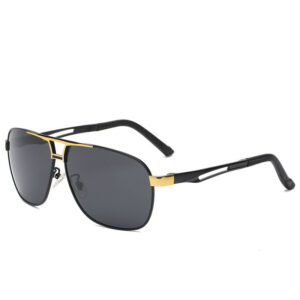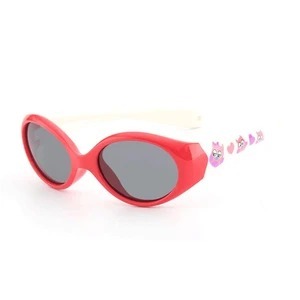
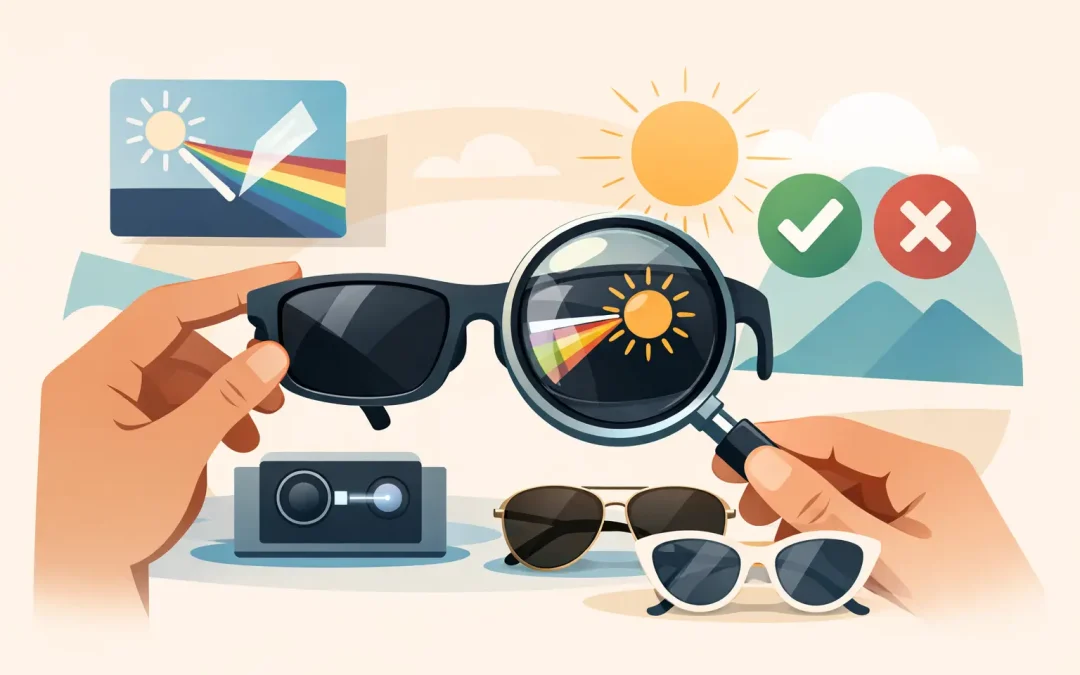
A dark lens can make a sunny day feel easier on your eyes, but darkness alone does not equal protection. Knowing how to tell UV400 sunglasses apart from ordinary tinted shades helps you shop with confidence, whether you are picking aviators for a road trip, sport frames for cycling, or colorful sunglasses for a beach weekend.
UV400 is one of the most useful markings to look for, but it is not something you can confirm just by holding sunglasses up to the light. The smart approach is to check the product information, inspect the markings, and know when a quick professional test is worth it.
What UV400 sunglasses actually mean
UV400 means the lenses are designed to block ultraviolet light with wavelengths up to 400 nanometers. That covers UVA and UVB rays, the two forms of UV exposure most often discussed in everyday sun protection.
UVA rays are present throughout the year and can pass through haze and clouds. UVB is especially associated with intense sunny conditions and can contribute to sunburned skin around the eyes. Both are reasons to wear properly rated sunglasses when you are driving, at the pool, on snow, or spending hours outdoors.
A genuine UV400 claim generally means the lenses block nearly all UV radiation through 400 nm. You may also see wording such as “100% UV protection” or “blocks UVA and UVB rays.” When the claim is clear and backed by a trustworthy seller, those descriptions point to the same everyday goal: shielding your eyes from harmful UV exposure.
How to tell UV400 sunglasses from the label
Start with the easiest evidence: the product listing, packaging, hangtag, or frame marking. Look for “UV400,” “100% UV protection,” or a clear statement that the lenses block both UVA and UVB rays. A small UV400 sticker on the lens is common on new sunglasses, while some frames have the marking printed on the inner temple.
Still, a sticker is a claim, not a laboratory report. It is helpful when it matches detailed product specifications, but it should not be the only reason you trust a pair. If a listing says only “sun glasses,” “tinted lens,” or “sun protection” without explaining UV protection, treat that as missing information rather than proof.
Be cautious with vague language such as “UV resistant” or “UV coated.” These phrases may sound reassuring, yet they do not tell you the level of filtering. A product page should make the rating easy to find. You should not have to guess whether a stylish pair is built for real daylight.
Check whether the details stay consistent
Reliable sunglasses information tends to agree across the listing, images, packaging, and customer support materials. If the title says UV400 but the specifications describe a different lens feature, pause before purchasing. The same applies when the photos show a UV400 label but the written details never mention UV protection.
Clear details matter even more when shopping online, where you cannot inspect the frame in person. Look for a seller that identifies lens type, frame material, intended use, and the UV-protection claim in plain language. A clear return policy and accessible customer support also make a lower-priced pair a much safer buy.
Dark lenses are not automatically UV400
One of the biggest sunglasses myths is that a darker lens provides more UV protection. Lens tint controls how much visible light reaches your eyes. UV filtering is a separate job.
That means black, brown, gray, green, blue, and mirrored lenses can all offer UV400 protection – or none at all. The same is true of lightly tinted fashion lenses. You cannot judge UV performance by lens color, mirror finish, or how expensive the frames look.
In fact, unverified dark lenses can be a poor choice. When a lens makes your surroundings darker, your pupils may open wider. If the lens does not filter UV properly, more ultraviolet light may enter the eye than it would without the sunglasses. Choose shades with a stated UV400 or 100% UV-protection rating, not simply the darkest pair on the display.
Polarized and UV400 are different features
Polarization is another term that can cause confusion. Polarized lenses reduce reflected glare from flat surfaces such as roads, water, windshields, and snow. That makes them especially comfortable for driving, fishing, beach days, and outdoor sports.
But polarization does not automatically confirm UV400 protection. Likewise, UV400 lenses do not have to be polarized. The best choice depends on how you will wear them. For everyday eye safety, look for UV400 protection. For extra visual comfort around glare, choose a pair that is both polarized and UV400 rated.
This is why a basic polarization test cannot tell you whether sunglasses block UV. Looking at a phone screen through the lenses or rotating the glasses in front of a polarized display may suggest that a lens is polarized, but it says nothing useful about its ultraviolet filtering.
What at-home tests can and cannot prove
Several online “tests” promise to reveal whether sunglasses are UV400. Most are unreliable. Holding the lenses near a UV flashlight, shining a light through them, or comparing how dark they look does not accurately measure the UV wavelengths the lenses block.
Some UV lights also produce different wavelength ranges than sunlight, and your eyes cannot see UV light in the first place. A lens that appears to change something under a lamp is not automatically verified UV400 eyewear.
At-home checks are still useful for spotting obvious quality problems. Inspect the lenses under bright light for deep scratches, peeling coatings, cracks, warped areas, or uneven tint. Put the frames on and look at a straight line, such as a window frame. If the line bends or swims as you move your head, the lenses may have optical distortion. These checks do not verify UV protection, but they can help you avoid uncomfortable, poorly made sunglasses.
The most reliable way to verify UV400 protection
If you already own a pair and want a real answer, take it to an optician or optical shop with a UV lens tester. This compact device measures the amount of ultraviolet light transmitted through the lens. It is the most practical way for a shopper to verify a UV-protection claim.
Not every shop offers this service, and some may charge a small fee. It is most worthwhile for sunglasses you wear often, expensive frames you bought secondhand, or kids’ sunglasses when the labeling is unclear. Children spend plenty of time outdoors, and a fun pair of frames should protect their eyes as well as complete their outfit.
A professional test is also helpful when a lens label has fallen off. Stickers are temporary, while the UV filter may be built into the lens material or added as a coating. The absence of a sticker on an older pair does not automatically mean the protection is gone.
Shop smarter without overpaying
Good UV protection is not reserved for luxury sunglasses. Affordable frames can offer dependable UV400 lenses when the seller is transparent about the product. The price should reflect the frame design, lens features, materials, and finish – not a mystery about whether the lenses protect your eyes.
Before checking out, make sure the listing clearly states UV400 or 100% UVA/UVB protection. Then choose the lens feature that suits your routine: polarized lenses for glare-heavy driving and water activities, wraparound coverage for sports, or fashion-forward square and aviator frames for everyday wear. Fit matters, too. Sunglasses that sit comfortably and cover your eyes well are the pairs you will actually reach for.
At Kooleyes, the goal is simple: sharp-looking shades should also help you see clearly in the sun. Once you know what a real UV400 claim looks like, you can choose a pair for your style, your plans, and your peace of mind – then wear them every time the light gets bright.