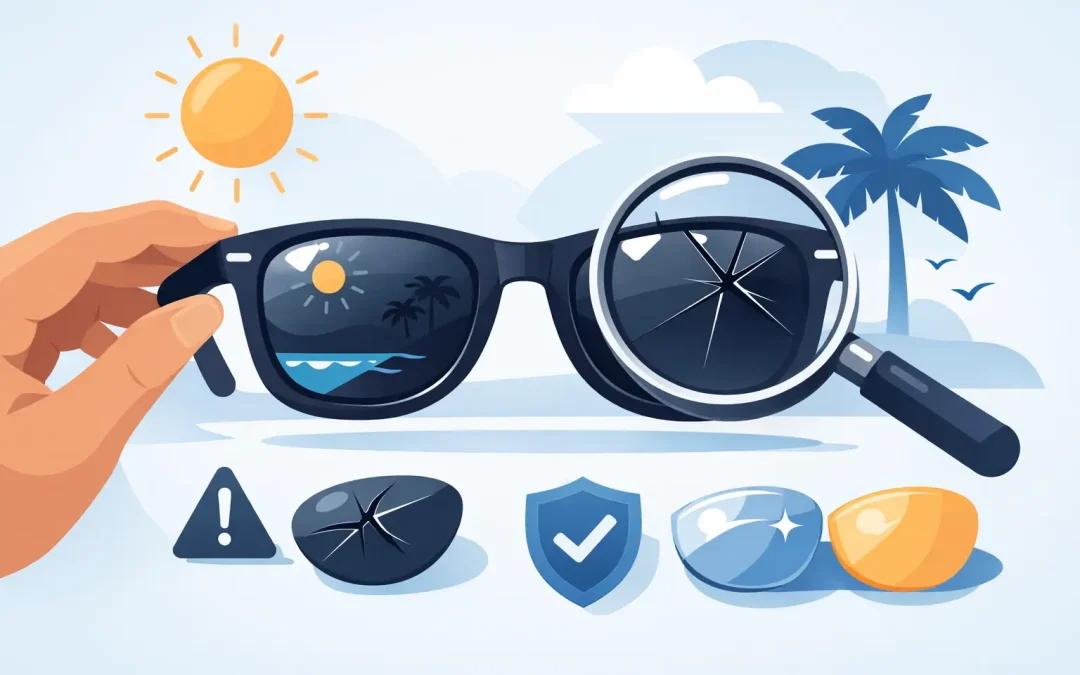
That $15 pair can be a great buy – or a poor shield for your eyes. Cheap sunglasses safety is not really about the price tag. It is about whether the lenses block harmful UV rays, whether you can see clearly through them, and whether the frames stay comfortable when you are driving, walking, traveling, or relaxing in the sun.
Affordable sunglasses make it easy to match your mood, outfit, and plans without treating eyewear like a luxury purchase. The smart move is knowing which details protect your eyes and which details are just marketing. Once you know what to look for, you can shop stylish frames with a lot more confidence.
Cheap Sunglasses Safety Starts With UV Protection
The first thing to check is the lens label. Look for UV400 or wording that says the sunglasses block 100% of UVA and UVB rays. This is the protection that matters most, whether you are wearing classic aviators at brunch, wraparound frames on a bike ride, or bright kids’ sunglasses at the beach.
UV rays are invisible, so you cannot judge protection by lens darkness. A very dark lens without real UV filtering may make your eyes feel shaded while still leaving them exposed to harmful rays. In fact, dark lenses can cause your pupils to open wider, which is exactly why proper UV protection should never be optional.
Good UV-blocking sunglasses help protect the delicate skin around your eyes and make long days outdoors more comfortable. They are especially useful around water, sand, snow, and pavement, where sunlight bounces back at your face from below as well as above.
Dark Lenses Are Not Automatically Safer
Lens color affects how the world looks, but color alone does not determine UV protection. Gray lenses tend to keep colors looking natural, making them an easy everyday choice. Brown or amber lenses can add contrast, which many people enjoy for driving, hiking, and changing light. Green, blue, pink, and mirrored lenses can deliver serious style while still providing dependable protection when the lenses are rated UV400.
Think of lens tint as your visual preference and UV protection as the nonnegotiable feature. You should expect both.
There is also a difference between fashion sunglasses and purpose-built activity sunglasses. A bold square frame may be perfect for city errands and outdoor lunches, while a closer-fitting sport frame can offer better side coverage for cycling, running, or boating. Neither is automatically better. The right choice depends on where you wear your sunglasses most.
Watch for Visual Distortion
A low price should not mean a warped view. Before wearing a new pair for driving or outdoor activities, look through both lenses at a straight edge, such as a window frame, countertop, or building line. Move the sunglasses slowly from side to side. If the straight line seems to bend, ripple, or jump, the lens may have distortion.
Minor differences can be easier to notice at the outer edges of wide lenses, but strong distortion is a deal-breaker. It can contribute to eye fatigue and make distances harder to judge. For driving, sports, and long sunny days, clear optics are worth prioritizing.
Why Polarized Lenses Can Be Worth It
Polarization is not the same thing as UV protection, but the two work beautifully together. UV protection filters damaging ultraviolet rays. Polarized lenses reduce harsh reflected glare from flat surfaces such as roads, water, windshields, wet pavement, and sand.
That makes polarized sunglasses a popular pick for commuters, anglers, beach days, road trips, and anyone who squints behind the wheel. They can make the view feel more relaxed and improve contrast in bright conditions. If glare is your biggest annoyance, polarization is one of the most useful upgrades you can choose without stepping into luxury-price territory.
There are a few trade-offs. Some digital screens, dashboard displays, and phone screens may appear darker or show rainbow-like patterns when viewed through polarized lenses. Pilots and people who rely on certain instrument displays may prefer non-polarized lenses for that reason. For most everyday driving and outdoor wear, however, the comfort benefit is hard to beat.
Check the Frame, Fit, and Coverage
Eye safety is also about whether your sunglasses stay where they belong. Frames that slide down your nose, pinch behind your ears, or press uncomfortably at the temples are more likely to end up in a bag instead of on your face.
A good fit should feel secure without being tight. The lenses should sit close enough to your face to block light from the front and, ideally, some light from the sides. Oversized frames, wraparound styles, and well-fitted rectangular frames can provide broader coverage, especially during high-glare activities.
For children, fit matters even more. Kids tend to run, climb, twist frames, and take sunglasses on and off all day. Choose lightweight frames with comfortable arms and lenses that fully cover the eye area. The fun part is easy: let them pick a color they actually want to wear. The safest pair is often the pair that makes it out the door.
How to Spot Better Affordable Sunglasses
You do not need to become an eyewear expert to shop well. Focus on clear product information, including UV400 or 100% UVA/UVB protection, and look for polarization if glare reduction is a priority. Product photos should show the frame shape and fit clearly, while descriptions should tell you the lens type and intended use.
Be cautious when a listing makes vague claims like “sun protection” without mentioning UV protection. Also skip pairs with rough edges, loose screws, cracked lenses, or lenses that pop out of the frame. Affordable does not mean disposable. A well-made budget pair should handle normal daily use and feel finished, not flimsy.
It is also smart to match your purchase to your routine. If you need sunglasses for driving, prioritize UV400 lenses, clear optics, and polarization. If your goal is vacation style, choose a face-flattering shape with dependable UV protection. If you are shopping for active weekends, lightweight frames and secure coverage should move to the top of your list.
Care Helps Keep Sunglasses Safe
Even quality UV-protective lenses need a little care. Scratches can scatter light and make bright conditions less comfortable, especially when you are driving toward the sun. Rinse off dust or grit before wiping lenses, then use a clean microfiber cloth rather than a shirt, towel, or paper napkin.
Keep sunglasses in a case when they are not on your face, and do not leave them loose on a car dashboard where heat and pressure can warp frames over time. If screws begin to loosen or a lens gets badly scratched, repair or replace the pair instead of trying to push through with compromised vision.
A Quick Shopping Reality Check
Price can influence materials, brand name, packaging, and extra features, but it does not set the level of UV protection by itself. Plenty of affordable sunglasses offer the features most people need: UV400 lenses, comfortable frames, stylish shapes, and polarized options for glare-heavy days.
At Kooleyes, the goal is simple: look sharp, see clearly, and keep eye protection within reach. Choose the pair that fits your style, then make sure the product details back up the look with real UV protection and the lens performance your day demands.
The best sunglasses are not the ones with the highest price. They are the pair you love wearing often, because they make bright days feel easier and help you see the world in style.