
Last Updated: October 23, 2026
Quick Summary
Polarized sunglasses contain a chemical filter that blocks horizontal reflected light, cutting road glare and improving contrast, while non polarized lenses only darken everything evenly with no directional filter. Polarization is a glare filter, not a safety rating, and it is not the same thing as UV protection, so verify UV400 separately.
- Polarized lenses block horizontal glare from wet roads, windshields and car hoods, reducing squinting and fatigue on daytime drives.
- For most daytime driving, lens category 2 or 3 is the right range, with category 3 covering VLT of 8 to 18 percent.
- Polarized lenses can make LCD dashboards, infotainment units and head-up displays darken, rainbow or nearly vanish.
- Skip polarization at night, dawn and dusk, when you need every available photon for road markings and pedestrians.
- Gray is the safest all-round lens tint because it reduces brightness without shifting color perception.
Table of Contents
- Polarized vs Non Polarized Sunglasses for Driving: The Core Difference
- Glare, Contrast and Eye Strain: What Changes Behind the Wheel
- The Best Sunglasses for Driving: What to Look For
- Polarized Lenses and Car Screens: Dashboards, HUDs and LCD Displays
- The Best Lens Color for Driving in Bright Sun, Rain and Low Light
- UV Protection in Sunglasses: Why Tint Is Not the Same as UV400
- When Polarized Lenses Are the Wrong Choice: Night, Dusk and Prescription Fit
- Conclusion
- Frequently Asked Questions
Polarized vs Non Polarized Sunglasses for Driving: The Core Difference
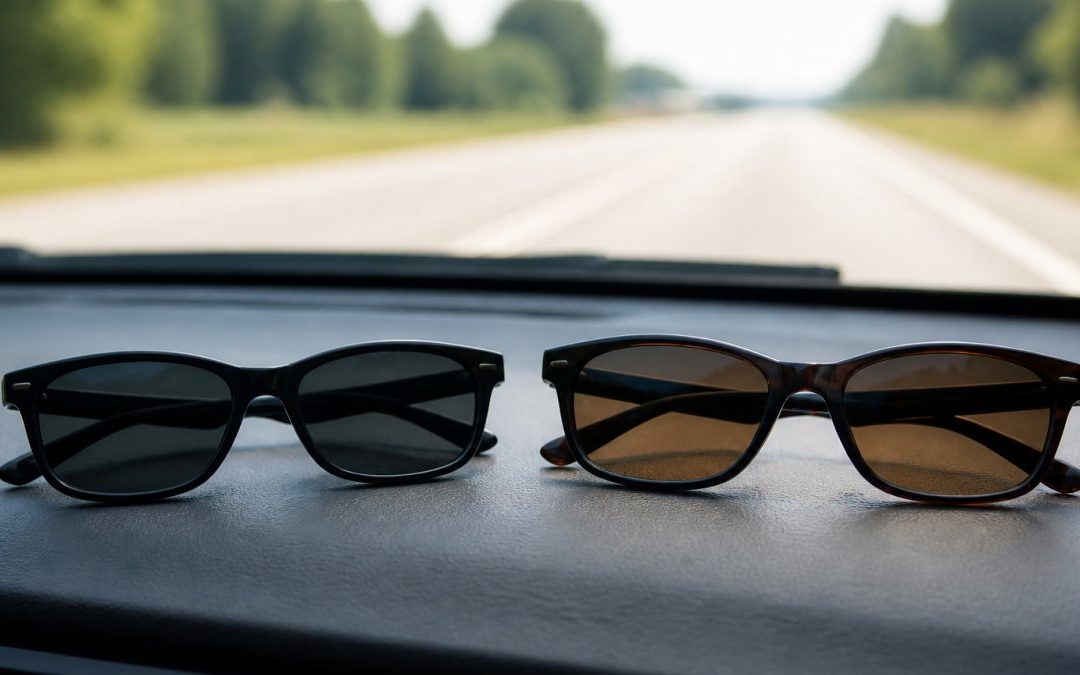
The core difference between polarized vs non polarized sunglasses for driving: polarized lenses contain a chemical filter that blocks horizontal reflected light, while non polarized lenses only darken everything evenly.
The short version: polarization is a glare filter, not a safety rating, and not the same thing as UV protection.
Polarized sunglasses are lenses built with a vertical filter that absorbs horizontal light waves bouncing off flat surfaces. Non polarized sunglasses are lenses that reduce overall brightness through tint alone, with no directional filter.
Below: when each type helps behind the wheel, where polarization backfires, and which specifications matter when you buy.
How Polarized Lenses Filter Reflected Light
Sunlight travels in waves in every direction. When it hits a flat, shiny surface at a low angle, the reflected light skews horizontal, the blinding sheet of white on a wet road or car hood.
A polarized filter is aligned vertically, so it absorbs that horizontal glare while letting vertical light through. The result is less squinting and more usable contrast. The American Academy of Ophthalmology’s guidance on sunglasses explains that this glare-blocking effect is separate from UV filtration, which is an important distinction most shoppers miss.
What Non Polarized Lenses Do Differently
Non polarized lenses simply lower the visible light reaching your eye. They do not sort light by direction, so bright reflections stay bright, just dimmer overall.
That sounds like a downside, and for daytime highway driving it usually is. But non polarized lenses still sell because they behave predictably with every screen, tint, and lighting condition.
Glare, Contrast and Eye Strain: What Changes Behind the Wheel
Glare reduction is the measurable win. Polarized lenses block horizontal glare from wet roads, windshields, and car hoods, so drivers report less squinting and fatigue on long daytime runs.
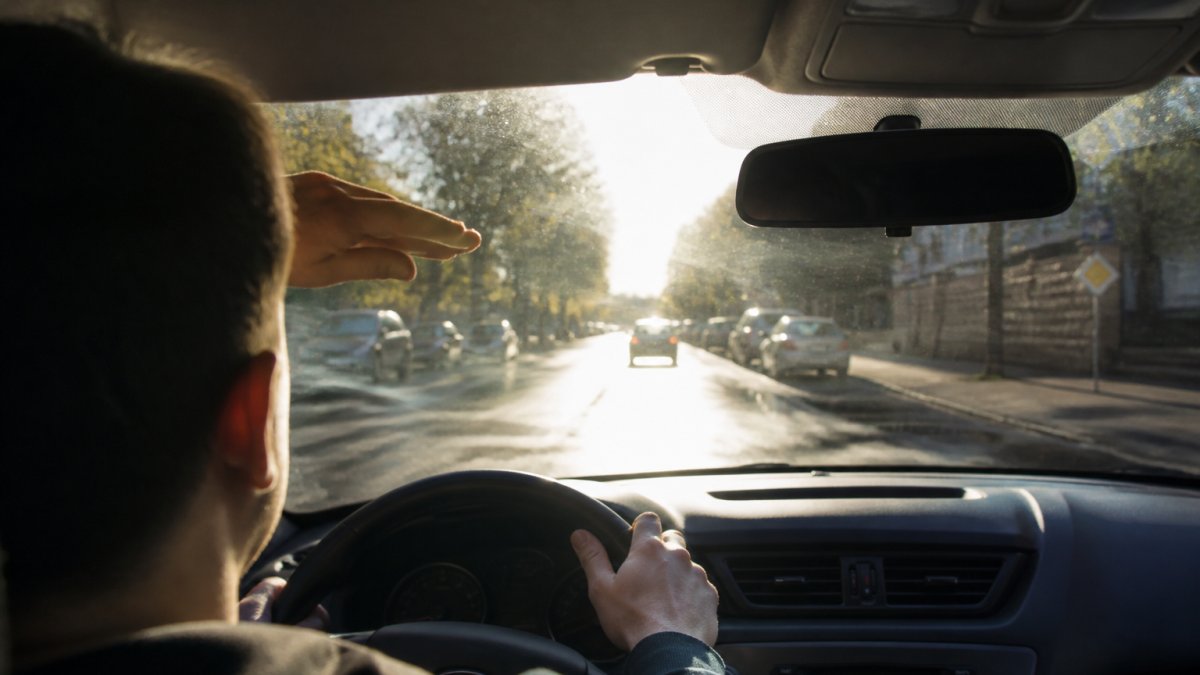
Eye strain is where the difference compounds. Constant squinting tires the muscles around the eye and pulls attention from the road. A common mistake is buying very dark non polarized lenses assuming darkness solves the problem, it does not.
If you drive the same route daily, test your sunglasses at the exact time of day the sun hits your windshield worst. Glare problems are time-specific, and a pair that feels fine at noon can be useless at 4pm.
The Best Sunglasses for Driving: What to Look For
The best sunglasses for driving combine a glare filter, genuine UV400 protection, a lens tint suited to your light conditions, and a frame that stays put. Everything else is style.
Start with the two numbers that actually matter: UV400 and visible light transmission (VLT).
UV400 means the lens blocks ultraviolet radiation up to 400 nanometers, covering the UVA and UVB spectrum that damages eyes. Look for “UV400” or “100% UV protection” stated explicitly on the lens, packaging, or product page.
Visible light transmission (VLT) is the percentage of visible light that passes through the lens. The ISO 12312-1 standard groups sunglasses into lens categories based on VLT:
- Category 0: 80-100% VLT, clear or very light tint, not for daytime driving
- Category 1: 43-80% VLT, light tint, suitable for overcast or low light
- Category 2: 18-43% VLT, medium tint, good for overcast and mixed conditions
- Category 3: 8-18% VLT, dark tint, the standard choice for bright daylight driving
- Category 4: 3-8% VLT, very dark, not legal for driving in many jurisdictions
For most daytime driving, category 2 or 3 is the right range.
Here is how we would score a pair before buying:
- UV400 rating stated explicitly on the lens or packaging
- Lens category 2 or 3 for typical daylight driving, with VLT percentage if listed
- Polarized filter if you drive mostly in daylight
- Neutral or gray-brown tint to keep color perception accurate
- Wrap or close-fitting frame to block light entering from the sides
- Lightweight frame material for all-day comfort
- Prescription compatibility if you need vision correction
| Priority | Specification | Why It Matters | Skip If |
|---|---|---|---|
| 1 | UV400 protection | Blocks ultraviolet rays fully | Never skip |
| 2 | Lens category 2-3 (VLT 8-43%) | Right light transmission for daylight | You need category 1 for overcast |
| 3 | Polarized filter | Cuts road and hood glare | You drive mostly at night |
| 4 | Frame fit | Stops side light and slipping | Never skip |
| 5 | Lens color | Affects contrast and color perception | You prefer a specific look |
Buying sunglasses labeled only “UV protection” without a UV400 or category marking is a gamble. Tint darkness tells you nothing about ultraviolet blocking, and dark lenses without UV filtering can actually let your pupils widen while UV still reaches the eye. Polarization is also not a UV rating: a polarized lens can still lack UV400 protection, so verify both specifications separately.
One more specification: impact resistance. If you drive in environments with road debris or ride a motorcycle, look for lenses meeting a recognized impact standard, such as ANSI Z87.1 in the US, a safety property no tint or polarization claim conveys.
Polarized Lenses and Car Screens: Dashboards, HUDs and LCD Displays
Polarized lenses and car screens can clash. Many LCD dashboards, infotainment units, and head-up displays emit polarized light, and when your lens filter sits at a crossed angle to the screen, the display can darken, rainbow, or nearly vanish.
This is the most overlooked drawback in polarized driving eyewear, and it is fixable: tilt your head slightly and the screen often returns, or adjust screen brightness.
Newer vehicles vary widely here. The NHTSA’s driver distraction guidance is worth reading on why keeping your eyes on the road matters more than fiddling with a dimmed screen at speed.
The Best Lens Color for Driving in Bright Sun, Rain and Low Light
Gray is the safest all-round lens tint for driving because it reduces brightness without shifting color perception. Brown and amber boost contrast in flat light and overcast conditions; green sits in between.
Here is how the main tints behave:
- Gray: truest color perception, best for bright sunlight and general daytime driving
- Brown/amber: enhanced contrast, useful in rain, mist, and dappled light
- Green: balanced contrast and color, a solid all-rounder
- Yellow: high contrast for low-light conditions, but not a substitute for headlights
Lens category matters as much as color. Category 3 handles bright sunlight. Category 2 suits overcast days. Category 1 is for very low light and is not a driving lens for strong sun. The ISO 12312-1 standard for sunglasses sets these light transmission categories, so a lens that states its category is giving you a measurable specification rather than a marketing claim.
Drivers who face mixed weather and want one pair: a category 3 gray polarized lens covers bright sun, and a brown tint handles the wet-road days better than gray does.
UV Protection in Sunglasses: Why Tint Is Not the Same as UV400
UV protection in sunglasses is a chemical property of the lens material and coating, not how dark it looks: a clear lens can carry full UV400 protection, a very dark lens none.
UV400 means the lens blocks ultraviolet rays up to 400 nanometers, covering the UV spectrum that damages eyes. Polarization does not guarantee it: many polarized lenses also carry UV400, but the two are separate specifications and should be verified separately.
Check the label for a UV400 or “100% UV protection” claim, and check the lens category for light transmission. Neither one tells you about the other.
When Polarized Lenses Are the Wrong Choice: Night, Dusk and Prescription Fit
Polarized lenses are the wrong choice at night, at dawn and dusk, and sometimes with prescription setups.
Night driving. Skip polarization entirely.
Dawn and dusk. The sun is low and glare is real, but light is scarce.
Tunnels and underpasses. This is where polarized lenses can catch drivers out.
Overcast, rain, and wet roads. Polarization genuinely helps here because wet roads produce strong horizontal glare.
Snow and high-altitude driving. Snow reflects enormous amounts of light, and polarization cuts snow glare effectively.
Prescription sunglasses. Polarization can be added to most prescription lenses, but check that lens curvature and frame fit work with your prescription.
Frame fit matters too. A lens that sits too far from your face lets side light in, defeating the filter.
A simple test before you buy: sit in your parked car with the sunglasses on and look at your dashboard, infotainment screen, and phone at the angle you normally hold them. Tilt your head slowly left and right. If any screen dims, rainbows, or disappears, you have found the polarization conflict before you have paid for it.
Conclusion
The hardest part of buying driving sunglasses is not style. It is matching the lens to the light you actually drive in, and most shoppers never think past “dark equals protective.”
UV protection is a baseline across the collection, with polarized options for daytime glare, and sport and classic frames that stay comfortable through a long commute. Browse the collection, check the UV400 and lens category on each pair, and pick the tint that matches your road.
Frequently Asked Questions
Are polarized sunglasses better for driving?
For daytime driving in bright sun, yes. Polarized lenses filter horizontal reflected light, which is the glare that bounces off wet roads, car hoods and windshields. That cuts the washout that makes lane markings and brake lights hard to read. They are not a universal upgrade, though: at night, dawn and dusk they can make road detail harder to see, and they can darken some dashboard and head-up displays. Many drivers keep a polarized pair for daytime and a lighter non-polarized pair for low light.
Can polarized sunglasses make it harder to see a car’s dashboard or screen?
Sometimes. Many LCD dashboards, infotainment screens and head-up displays emit polarized light, and when the lens filter sits at a crossed angle to the screen, the display dims or turns patchy. Tilting your head usually restores it, which is a quick way to test. If your car relies heavily on a head-up display, try a non-polarized pair or check the screen through the lenses before committing. It is a fit issue between lens and display, not a fault in the sunglasses.
What lens color is best for driving?
Grey is the safest all-round choice because it lowers brightness without shifting colors, so traffic lights and brake lights stay accurate. Brown and amber boost contrast on overcast days and in flat light, which helps on grey roads. Green sits between the two. Yellow is best kept for low light and fog, not bright sun, and very dark tints are a poor pick for dawn or dusk. Whatever the color, confirm UV400 protection and a category 2 or 3 tint for daytime road use.
Do polarized sunglasses block UV rays?
Polarization and UV protection are separate things. The polarizing filter only removes reflected glare; it does nothing for ultraviolet rays on its own. UV protection comes from the lens material and its UV-blocking coating, and you should look for a UV400 label, which blocks wavelengths up to 400 nanometres. A cheap dark lens with no UV400 rating can be worse than no sunglasses, because the tint opens your pupil while UV still gets through. Check both labels before you buy.
Choosing the right lens for your commute should take minutes, not a return label. Kooleyes offers polarized and non polarized styles across classic, chic, and sporty frames, all built with UV protection and all-day comfort in mind. Shop Kooleyes and find the pair that handles your brightest drive.


