A great pair of sunglasses should disappear once you put them on. If you are constantly pushing them up your nose, feeling a pinch behind your ears, or getting headaches after a sunny drive, the fit is off. Learning how to fit sunglasses comfortably helps you get the protection, clear vision, and confident look you bought them for.
The good news: comfort is not reserved for expensive eyewear. The right frame size, a few careful adjustments, and an honest test in your everyday routine can make affordable polarized sunglasses feel made for you.
Start With a Stable, Pressure-Free Fit
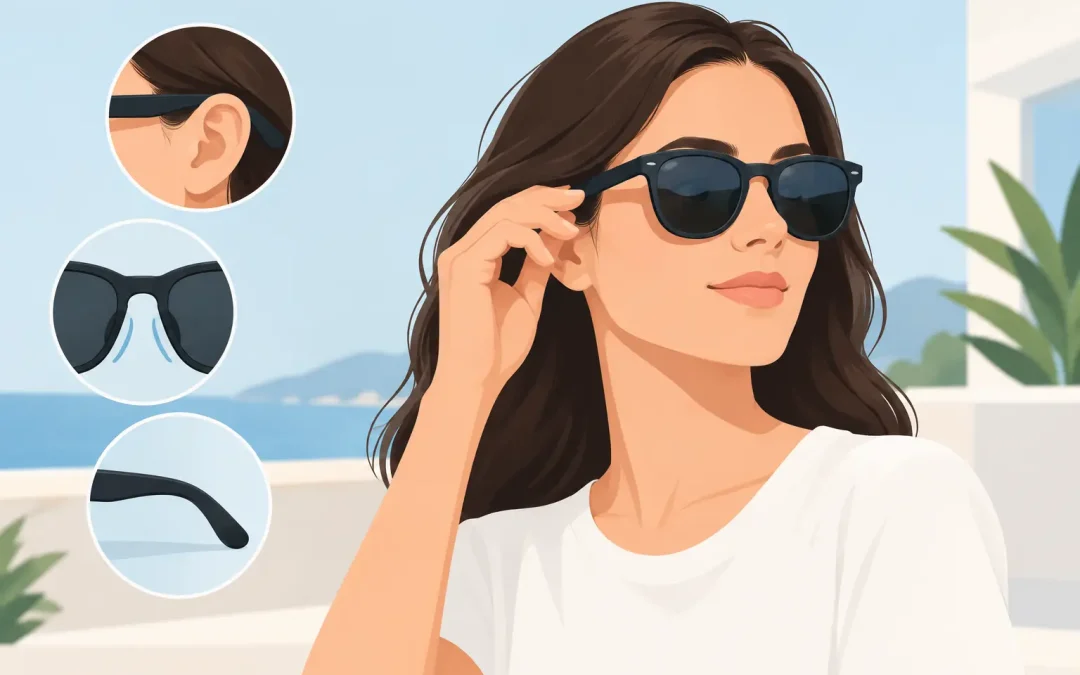
Sunglasses should sit level across your face, with the bridge resting gently on your nose. They should not slide down when you look toward the ground, but they should never leave deep marks or feel like they are gripping too tightly.
A simple test is to put the sunglasses on, smile, turn your head side to side, and look down as if checking your phone. A well-fitting frame stays in place through each movement. If it moves a little, that is normal. If it slips enough to change your line of sight, it needs adjustment or may simply be the wrong size.
Pay attention to comfort after 10 to 15 minutes, not only in the mirror. Some frames feel fine at first but create pressure at the temples or behind the ears once you have worn them on a walk, while driving, or at the beach.
The bridge should match your nose
The nose bridge carries much of a frame’s weight. When it is too wide, sunglasses slide down and sit too low. When it is too narrow, they can pinch, leave marks, and feel heavy even when the frame itself is lightweight.
Frames with adjustable nose pads are especially useful if you have a narrow bridge, a low nose bridge, or find that plastic frames tend to slide. A gentle adjustment can lift the lenses slightly, improve airflow, and keep the frame from resting on your cheeks. For molded plastic bridges, the fit cannot be changed as easily, so choosing a bridge shape that already feels natural matters more.
If your lashes touch the lenses, the frame may be sitting too close to your face. Adjustable pads can sometimes create a little more space. Otherwise, look for a frame with a different bridge design or more lens tilt.
Temple arms should hold, not squeeze
The temple arms are the pieces that run along the sides of your head and curve behind your ears. They should make light, even contact. Excess pressure at the temples can cause soreness or headaches, while arms that are too loose let the frame drift down your nose.
Check for symmetry by placing your sunglasses on a flat surface with the lenses facing up. Both temple tips should touch the surface evenly. If one arm sits higher, the frame may be twisted from being stored loose in a bag or from an accidental bend.
Metal frames and sunglasses with adjustable arms can often be fine-tuned carefully. Plastic frames require more caution. Do not force them cold, especially in extreme heat or cold, since material can weaken or crack. If the adjustment feels beyond a tiny, gentle correction, an optician can help protect both the frame and lenses.
How to Fit Sunglasses Comfortably for Your Face Shape
Face shape can guide your style choice, but fit comes first. The most flattering sunglasses are often the ones that sit naturally, stay centered, and give your features room to show. You do not need to follow rigid style rules, though a few proportions make online shopping easier.
The frame should generally be close to the width of your face. If it is much narrower, the arms may press into your temples and the look can feel cramped. If it is much wider, it may slide, shift when you move, or overwhelm your features. Slightly wider than your face can work beautifully for an oversized fashion look, as long as the bridge and temples remain secure.
Lens height matters, too. Larger lenses offer more coverage from bright sun, reflected light, and wind, making them a smart choice for driving, beach days, and outdoor events. But an oversized lens should not rest on your cheeks when you smile. If it does, try a slightly shallower square, rectangle, or aviator shape.
Rounder faces often enjoy the definition of rectangular or angular frames. Square and heart-shaped faces may like rounded lenses or classic aviators. Oval faces can wear many silhouettes, from sporty wrap styles to colorful statement frames. These are starting points, not limits. A pair that feels secure and makes you feel sharp is always worth a second look.
Check Coverage Before You Commit
Comfort is more than avoiding pressure. Sunglasses should provide useful coverage without blocking your eyebrows, cheeks, or peripheral view in an awkward way. Look straight ahead and check that the frame does not sit so high that it crowds your brow or so low that sunlight enters above the lenses.
For driving, make sure the frame gives you a clear view of your mirrors and dashboard without needing to tilt your head. Polarized lenses can reduce glare from roads, windshields, and water, but a poor-fitting frame can still let bright light sneak in around the edges.
For cycling, running, and other active days, a closer-fitting sport frame can help reduce wind and side glare. The trade-off is that wraparound styles may feel more snug than casual fashion frames. They should feel secure, not restrictive. If you feel pressure around your temples before you even start moving, size up or choose a lighter design.
Use Frame Measurements as a Shopping Shortcut
When a pair you own fits well, look inside the temple arm for a set of numbers, often shown in a format such as 52-18-140. These numbers usually refer to lens width, bridge width, and temple length in millimeters. They do not guarantee that every frame with the same measurements will fit identically, because lens curvature and frame shape also matter. Still, they are one of the best reference points when shopping online.
A smaller lens width and shorter temple length generally suit smaller faces, while larger measurements can offer a roomier fit. If your current sunglasses pinch at the sides, look for a slightly wider overall frame or a wider lens measurement. If they slide despite a good bridge fit, a shorter temple arm or a frame with more curved temples may help.
Do not choose only by measurements. Product photos can show whether a frame is narrow, oversized, flat, curved, sporty, or designed with adjustable nose pads. Think about where you will wear it most. A bold retro square frame may be perfect for city weekends, while a lightweight polarized wrap can be the better companion for long road trips.
Make Small Adjustments the Safe Way
A slightly crooked pair does not always mean it is a bad fit. Before trying to bend anything, clean the lenses and check whether dirt, sunscreen, or hair products are making the nose area slippery. Then set the sunglasses on a level surface to see whether one temple is uneven.
For adjustable nose pads, make tiny changes only. Moving pads closer together can tighten the fit on the nose; moving them slightly apart can relieve pressure. Adjust both sides evenly so the frame remains level. With metal temple arms, a minor inward or outward adjustment can change how firmly they rest behind the ears.
Avoid using hot water, a hair dryer, or pliers on sunglasses at home. Excess heat can damage lens coatings, and too much force can warp the frame or loosen hardware. When a frame needs more than a subtle correction, professional adjustment is the safer choice.
Know When the Problem Is the Frame, Not the Adjustment
Not every comfort issue can be fixed. If sunglasses leave lasting pain at your temples, slide repeatedly despite clean nose pads, sit against your cheeks, or block your natural view, another shape or size will serve you better.
This is where having style options helps. A lightweight rectangular frame may solve the sliding you experienced with a heavy oversized pair. Adjustable-pad aviators may feel better than a molded bridge. A sporty frame with rubberized contact points may be the answer for sweaty summer activities. Kooleyes makes it easy to switch between trend-forward everyday frames and performance-minded polarized styles without treating sunglasses like a luxury-only purchase.
For children, fit deserves extra attention. Kids’ sunglasses should sit securely without squeezing, cover the eyes well, and be comfortable enough that a child will actually keep them on. Adult frames usually do not provide the right proportions, even if they seem to fit at first glance.
Your sunglasses should support the way you move through bright days, not become another thing to manage. Try them in real light, trust what your face is telling you, and choose the pair that lets you look sharp, see clearly, and forget you are wearing them.