Table of Contents
- How to Measure Face Shape
- Best Sunglasses for Face Shape: Frame Matching Guide
- Sunglasses Fit Guide: Getting the Right Size
- Polarized Sunglasses Benefits for Daily Wear
- Balancing Style with Comfort and Protection
- Common Mistakes When Choosing Sunglasses
- Frequently Asked Questions
Last Updated: October 11, 2026
How to Measure Face Shape
Learning how to choose sunglasses for face shape starts with understanding your own face shape. Face shape determines which frame styles will create visual balance and enhance your appearance rather than work against it.
The Four Key Measurements
To identify your face shape accurately, you need four key measurements. Using a soft measuring tape (or even a piece of string marked with a pen), measure these distances on your face:
- Forehead width – Measure across your forehead at its widest point, typically above your eyebrows
- Cheekbone width – Measure from the top of your ear to the tip of your nose, then double that number for total width
- Jawline length – Measure from the center of your chin to the bottom of your ear, then double it
- Face length – Measure from the center of your hairline to the tip of your chin
Write down each measurement. The key is comparing them to identify which dimension dominates your face shape.
Identifying Your Face Shape Category
Once you have your measurements, compare them to determine your face shape category. If your face length is noticeably longer than your width, you likely have a long face. A square face shows similar measurements across all dimensions with a strong, angular jawline. Heart-shaped faces have a wider forehead and narrower chin, while round faces display nearly equal width and length with soft, curved features.

Best Sunglasses for Face Shape: Frame Matching Guide
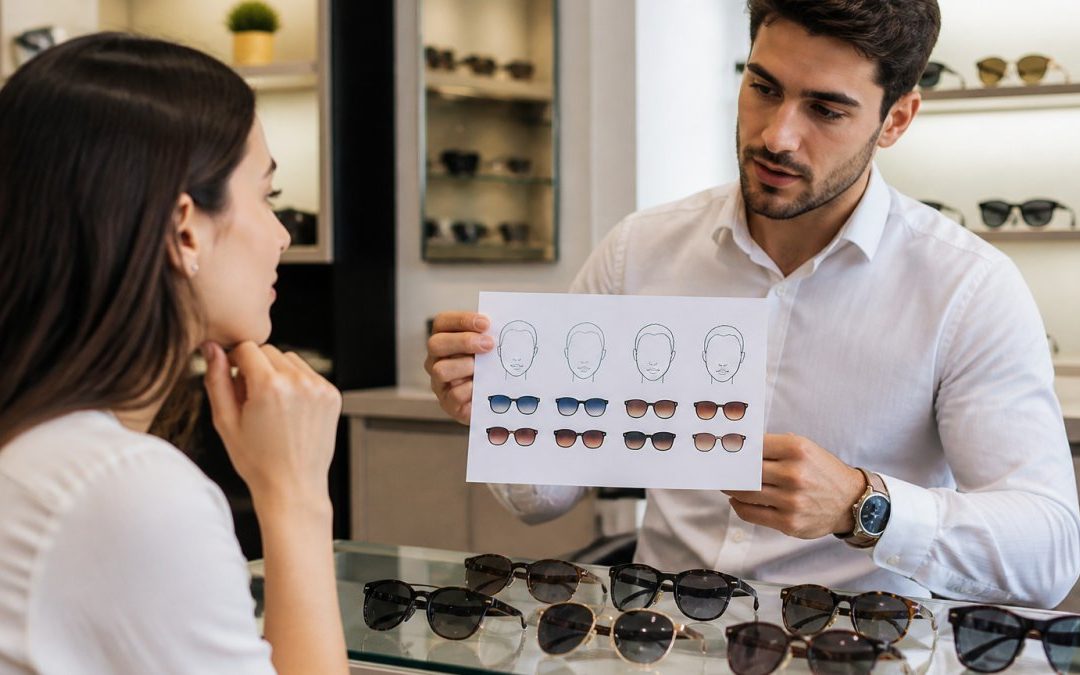
How to choose sunglasses for face shape comes down to creating visual balance. The goal is selecting frame shapes that complement your natural features rather than emphasizing imbalance. Different face shapes benefit from different frame styles, and understanding these pairings helps you find sunglasses that enhance your look while providing essential eye protection.
Oval Faces
Oval faces are considered the most versatile for sunglasses because the balanced proportions work with nearly any frame style. Your face length is slightly longer than your width, and your features are proportionally balanced. This means you can wear round frames, square frames, rectangular frames, or cat-eye styles without concern about creating unflattering proportions.
The best approach for oval faces is choosing based on personal style and activity rather than corrective balance. If you prefer sporty looks, try wraparound frames or aviator styles. For classic elegance, rectangular or browline frames work beautifully.
Round Faces
Round faces have nearly equal width and length with soft, curved features and a rounded jawline. To create visual balance, you want frames that add definition and make the face appear longer or more angular. Rectangular frames, square frames, and browline styles work exceptionally well because their straight lines contrast with your rounded features.
Avoid round frames or overly curved styles, as these echo your face’s natural roundness and can make your face appear wider. Instead, look for frames with angular corners and horizontal lines. Cat-eye frames also work well for round faces because the upward angle creates a lifting effect.
Square Faces
Square faces feature strong jawlines, wide foreheads, and nearly equal width and length. Your angular features are already prominent, so the goal is softening that angularity rather than emphasizing it further. Round frames, oval frames, and browline styles with curved edges create visual softness and balance.
Avoid rectangular or overly angular frames that reinforce your face’s strong lines. Instead, choose frames with rounded corners and curved bridge designs. Oversized frames can also work well for square faces because they draw attention upward and create a more balanced proportion.
Heart-Shaped Faces
Heart-shaped faces have a wider forehead and narrower chin, creating an inverted triangle proportion. To balance this, you want frames that draw attention downward and add width to your lower face. Browline frames and bottom-heavy frame styles work particularly well because they emphasize the lower half of your face.
Avoid frames that are top-heavy or emphasize your forehead width. Cat-eye frames can work if they’re not too dramatic, but ensure the frame doesn’t overemphasize the upper portion of your face. Oval and round frames also suit heart-shaped faces because they add softness without drawing attention upward.
Long Faces
Long faces have greater length than width, with features spread vertically rather than horizontally. To create visual balance, you want frames that add horizontal width and make your face appear shorter.
Avoid tall, narrow frames that emphasize your face’s length. Instead, choose frames that are wider than they are tall. Browline frames and aviators often work well for long faces because they create horizontal emphasis.
Sunglasses Fit Guide: Getting the Right Size
Even the perfect frame shape won’t work if the fit isn’t right. Many customers ask us how to know if sunglasses will actually sit comfortably without trying them on first. Understanding frame measurements and fit terminology removes the guesswork from online shopping.
Understanding Frame Measurements
Every pair of sunglasses includes three key measurements printed on the inside of the frame.
Lens width is the horizontal measurement of one lens in millimeters. This determines how much of your eye area is covered. Standard lens widths range from 50mm to 65mm.
Bridge width is the measurement across the bridge of the nose where the frame sits. This typically ranges from 14mm to 24mm.
Temple length is measured from the hinge to the end of the arm, typically ranging from 135mm to 150mm. This determines how the sunglasses sit on your head.
How to Fit Sunglasses Properly
Once you know your measurements, fitting sunglasses properly involves checking several points. The lens should sit close to your face without touching your cheeks or eyelashes when you look straight ahead.
The frames should sit level on your face, not tilted up or down. When you look straight ahead, the top of the frame should align with your eyebrow, and the bottom should sit just above your cheekbones.
When you smile or move your face, the sunglasses shouldn’t shift significantly. If they slide down when you smile or tilt up when you look down, the fit isn’t right.
Polarized Sunglasses Benefits for Daily Wear
Polarized lenses offer significant advantages for everyday wear, particularly for driving and outdoor activities. Understanding polarization helps you decide whether this technology is worth the investment for your lifestyle.
Polarized lenses contain a special filter that blocks reflected light waves, reducing glare from water, snow, and pavement.
The main consideration with polarized lenses is their interaction with digital screens and some car windshields. Some LCD displays may appear dark or distorted when viewed through polarized lenses, though modern screens have minimized this issue.
Balancing Style with Comfort and Protection
Choosing sunglasses involves balancing three essential factors: aesthetic appeal, physical comfort, and eye protection. The best sunglasses excel in all three areas.
UV Protection and Lens Technology
UV protection is non-negotiable for eye health. Your sunglasses should block 100% of UVA and UVB rays, often labeled as UV400 protection.
Lens material affects both protection and durability. Polycarbonate lenses are impact-resistant and ideal for sports and outdoor activities. Glass lenses offer superior optical clarity but are heavier and more fragile. Trivex material provides a middle ground, lightweight, durable, and optically clear.
Lens color and tint also matter. Gray lenses provide neutral color perception and work well for most situations. Brown or amber lenses enhance contrast and work particularly well for driving. Rose or pink tints reduce eye strain in bright conditions.
Personal Style and Individual Variation
While frame shapes and face shapes provide helpful guidelines, personal style and individual variation matter significantly. Some people with square faces prefer the softness of round frames; others prefer emphasizing their angular features with rectangular styles. Your personal aesthetic should ultimately guide your choice.
Consider your lifestyle and activities when selecting sunglasses. Athletes and outdoor enthusiasts benefit from wraparound styles and polarized technology. At Kooleyes, our extensive collection includes classic aviators, chic cat-eyes, durable sports eyewear, and contemporary styles, ensuring you find sunglasses that match both your face shape and your personal style.
Common Mistakes When Choosing Sunglasses
Understanding common pitfalls helps you avoid frustration when selecting frames. Many customers choose based solely on appearance without considering fit, resulting in sunglasses that slide down or pinch uncomfortably.
Selecting frames without knowing your face shape often leads to choices that don’t flatter your features. Some people choose frames that are too small for their face or too large, creating proportional imbalance.
Another mistake is overlooking lens technology for your specific activities. Choosing regular lenses for driving when polarized options would significantly reduce glare represents a missed opportunity for comfort and safety.
Choosing the right sunglasses involves more than picking a style you like, it requires understanding your face shape, ensuring proper fit, and selecting lens technology that matches your lifestyle. Our sunglasses combine UV400 protection with fashionable designs across classic aviators, chic cat-eyes, and durable sports eyewear, ensuring you find frames that enhance your look while keeping your eyes safe.
Frequently Asked Questions
How do I figure out my face shape?
Measure four key areas: forehead width, cheekbone width, jawline width, and face length. Compare these measurements, the widest area indicates your face shape. Oval faces have balanced proportions. Round faces have similar width and length with soft features. Square faces have a strong jawline and equal width and length. Heart-shaped faces are wider at the forehead and narrower at the jawline. Long faces are noticeably taller than wide.
What sunglasses look best on each face shape?
Oval faces suit most styles; try rectangular or cat-eye frames. Round faces benefit from angular frames like square or aviators to add definition. Square faces work well with round or oval frames to soften features. Heart-shaped faces pair nicely with bottom-heavy styles like cat-eyes or clubmasters. Long faces look better with wider frames and horizontal styles that add width. The key is choosing frames that contrast with your natural proportions.
What are the best sunglasses for my face shape?
The best sunglasses for your face shape complement your natural proportions while providing UV400 protection. After identifying your face shape, choose frames that contrast with it, angular frames for round faces, curved frames for square faces. Ensure proper fit: the frame should sit level on your nose, the bridge should not pinch, and temples should rest comfortably behind your ears. Quality matters; look for polarized lenses if you drive or spend time outdoors, as they reduce glare and eye strain.
How should sunglasses fit your face?
Sunglasses should sit level on your nose without sliding down or sitting too high. The bridge width should match your nose width, typically 14-16 millimetres for most adults. Lens width varies from 50-65 millimetres; choose based on your face width and desired coverage. Temple length ranges from 130-150 millimetres; they should rest comfortably over your ears without pressure. Your eyes should sit in the center of each lens, and the frame should not cover your eyebrows or rest on your cheeks.
What are the benefits of polarized sunglasses?
Polarized lenses filter reflected light, eliminating glare from water, snow, and road surfaces. This reduces eye strain and fatigue, making them ideal for driving, fishing, and water sports. Polarized sunglasses improve visual clarity and contrast, helping you see details more sharply. They provide the same UV protection as non-polarized lenses while offering superior comfort in bright conditions. However, they can interfere with digital screens and some car displays, so consider your daily activities when choosing.
Can I wear any sunglasses with my face shape?
While you can technically wear any style, choosing frames that complement your face shape enhances your appearance and overall confidence. Wearing frames that clash with your proportions can emphasize features you’d prefer to downplay. The right frame shape creates visual balance, it’s not about rigid rules but about understanding how proportions work. Personal style matters too; if you love a particular frame despite it not being the ‘textbook’ match for your face shape, confidence often makes it work better than a technically perfect but uncomfortable choice.
Is there an app to see what sunglasses look good on my face shape?
Many eyewear retailers now offer virtual try-on tools and frame advisors that let you upload a photo and preview different styles on your face. These tools help visualize how frames look before purchasing. However, they work best alongside understanding your face shape and measurements. Use these tools to explore styles, but verify fit by checking frame measurements against your face dimensions. Reading customer reviews and looking at real-world photos of frames on similar face shapes also provides valuable perspective.