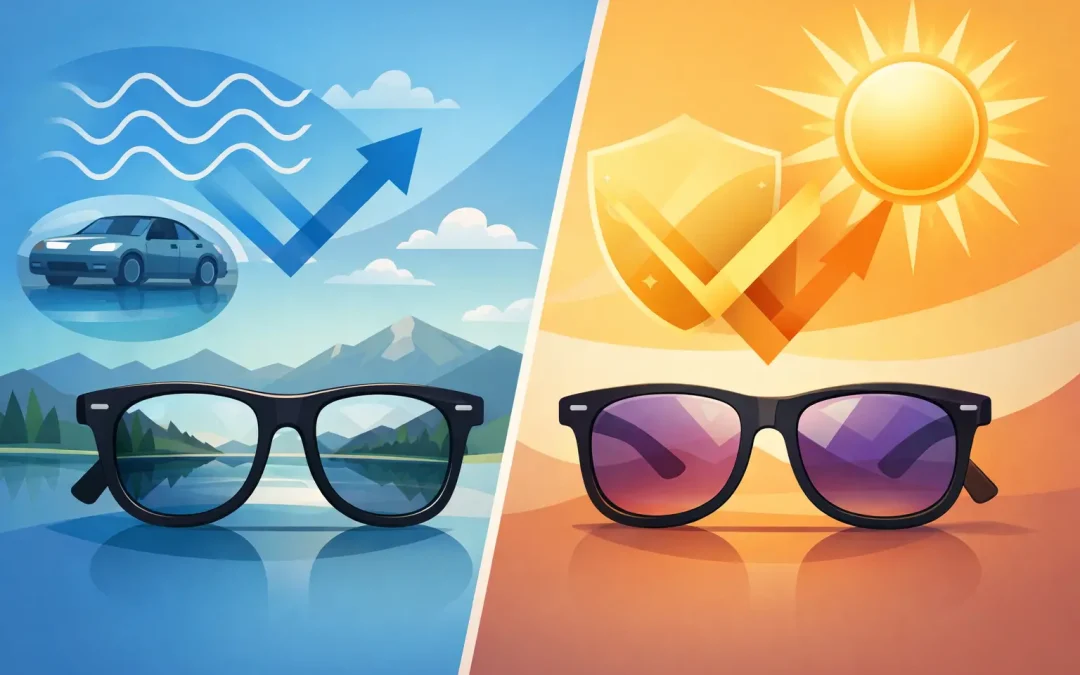
That sharp white glare bouncing off a wet highway, ocean water, or a car hood can make even a great outfit feel less put together. When comparing polarized vs UV protection sunglasses, the key is simple: one feature helps you see more comfortably, while the other helps protect your eyes from invisible sunlight. The best everyday pair often gives you both.
A stylish frame is the fun part. But whether you are driving across town, relaxing poolside, cycling on a bright trail, or picking out shades for your child, understanding the lenses makes shopping much easier. Here is what polarization and UV protection actually do, plus how to choose the right combination for your day.
Polarized vs UV Protection Sunglasses: The Real Difference
Polarized lenses are designed to cut glare. UV-protective lenses are designed to block harmful ultraviolet rays. They are not the same feature, and having one does not automatically mean you have the other.
Glare happens when sunlight reflects off flat surfaces such as roads, water, snow, windshields, and pavement. It can make colors look washed out, cause squinting, and hide details in your surroundings. A polarized lens uses a special filter that reduces much of this horizontal reflected light. The result is a clearer, more relaxed view, especially outdoors.
UV protection works differently. Ultraviolet rays cannot be seen, but repeated exposure can harm the eyes and the delicate skin around them. Quality sunglasses should block UVA and UVB rays. Look for wording such as “100% UV protection” or “UV400,” which means the lenses block light rays up to 400 nanometers, covering both UVA and UVB radiation.
Think of it this way: polarization is about visual comfort and clarity. UV protection is about eye safety. A lens can be dark without providing adequate UV protection, and it can be polarized without offering the level of UV blocking you expect. Always check the product details rather than judging a pair by lens color alone.
What Polarized Sunglasses Do Best
If bright reflected light bothers your eyes, polarized sunglasses can feel like an instant upgrade. They are especially useful in places where glare is part of the scenery, not just an occasional annoyance.
For driving, polarized lenses can reduce the glare flashing off windshields, chrome, wet streets, and the long stretch of highway ahead. That can make it easier to notice road markings and changing conditions. For beach days and boating, they help calm the intense reflection coming off water. Anglers also like polarized lenses because they may help them see beneath the surface more easily.
Outdoor athletes often choose polarization for the same reason. Cyclists, runners, hikers, and golfers may find that reduced glare makes changing terrain and contrast easier to read. You may also simply enjoy the richer color and crisper look polarized lenses can create during a sunny walk through the city.
There are a few trade-offs. Polarized lenses can make some LCD and LED screens appear dim or rainbow-like at certain angles. That matters if you regularly check a car display, phone, smartwatch, bike computer, or cockpit instrument panel. Polarization can also make patches of ice harder to spot in certain conditions, because the glare that sometimes reveals the ice is reduced.
That does not make polarized lenses a bad choice. It just means your daily routine matters. For most people who spend time driving, near water, or outdoors, the comfort benefit is hard to beat.
Why UV Protection Is Non-Negotiable
UV protection is for every sunny day, not only the extra-bright ones. UV rays can reach your eyes on hazy days, through scattered clouds, and during cooler seasons when sunglasses may not feel as necessary. Snow, sand, and water can reflect sunlight too, increasing exposure from more than one direction.
Wearing sunglasses with reliable UV protection can help you avoid the immediate discomfort of squinting and light sensitivity. More importantly, it supports long-term eye health. UV exposure has been associated with conditions that affect the eye’s surface and lens over time, including cataracts.
Do not assume a darker lens offers better UV defense. A dark lens without proper UV filtration may cause the pupils to open wider while still allowing ultraviolet rays through. That is the opposite of what you want. Whether you prefer black, brown, gray, green, blue, pink, mirrored, or lightly tinted lenses, the UV rating is what matters.
For kids, this matters even more. Children spend plenty of time outdoors, and their eyes need the same thoughtful protection as their skin. A fun, colorful pair with 100% UV protection makes it easier for children to build a sunglasses habit early.
Should You Choose Polarized Lenses With UV Protection?
For most shoppers, yes. Polarized sunglasses with 100% UVA and UVB protection are a smart all-around choice because they cover both comfort and safety. You get less distracting glare plus dependable protection from ultraviolet rays, all in one frame.
This combination is particularly practical for driving, vacations, beach days, fishing, cycling, outdoor sports, and everyday errands in bright weather. It also lets you choose your style first without giving up the features that make sunglasses worth wearing. Retro aviators, bold square frames, wraparound sport styles, and colorful fashion sunglasses can all offer serious lens performance.
Still, polarized is not mandatory for everyone. If you primarily wear sunglasses for short walks, quick commutes, or casual outdoor time and need to read screens often, non-polarized lenses with full UV protection may suit you perfectly. You will still get the essential protection your eyes need.
The must-have is UV protection. Polarization is the valuable add-on when glare reduction fits your lifestyle.
How to Shop for the Right Pair
Start with where you will wear your sunglasses most. If you drive regularly, spend weekends near water, or play outdoor sports, look for polarized lenses labeled with 100% UV protection or UV400. If your focus is city style, travel, or occasional sunny-day wear, UV-protective lenses are the baseline, and polarization is your call based on comfort.
Then consider lens color. Gray lenses offer natural-looking color perception and work well for bright, everyday conditions. Brown or amber lenses can boost contrast, which many people enjoy for driving and outdoor activities. Green lenses balance color and contrast nicely, while mirrored lenses add a bold finish and can reduce the amount of visible light reaching your eyes.
Frame coverage matters, too. Oversized frames and wraparound shapes can help block sunlight from the sides, which is useful at the beach, on a bike, or during long days outside. A frame that slips down your nose or pinches behind your ears will not get worn often, no matter how good the lens technology is. Prioritize a comfortable fit that matches your face shape and personal style.
Finally, read the details before checkout. Look for a clear UV claim, check whether the lens is polarized if that is a priority, and choose a frame designed for your activity level. At Kooleyes, that can mean pairing everyday UV protection with a trend-forward frame, or choosing polarized sport-ready shades when glare is part of the plan.
A Quick Way to Check Polarization
If you already own a pair and are unsure whether it is polarized, look at an LCD screen while wearing the sunglasses. Slowly tilt your head from side to side. With many polarized lenses, the screen will become noticeably darker at a certain angle. This is only a quick at-home clue, not a substitute for checking the original product specifications.
For UV protection, you cannot reliably test the lenses with your eyes. Trust clear product labeling from a retailer that states the level of UV protection. If an older pair is scratched, damaged, or has no information about UV filtering, replacing it is a sensible move.
The right sunglasses should make bright days feel easier, not force you to choose between looking sharp and seeing clearly. Pick full UV protection as your foundation, add polarization when glare is part of your everyday view, and choose a frame you will be excited to wear every time the sun comes out.