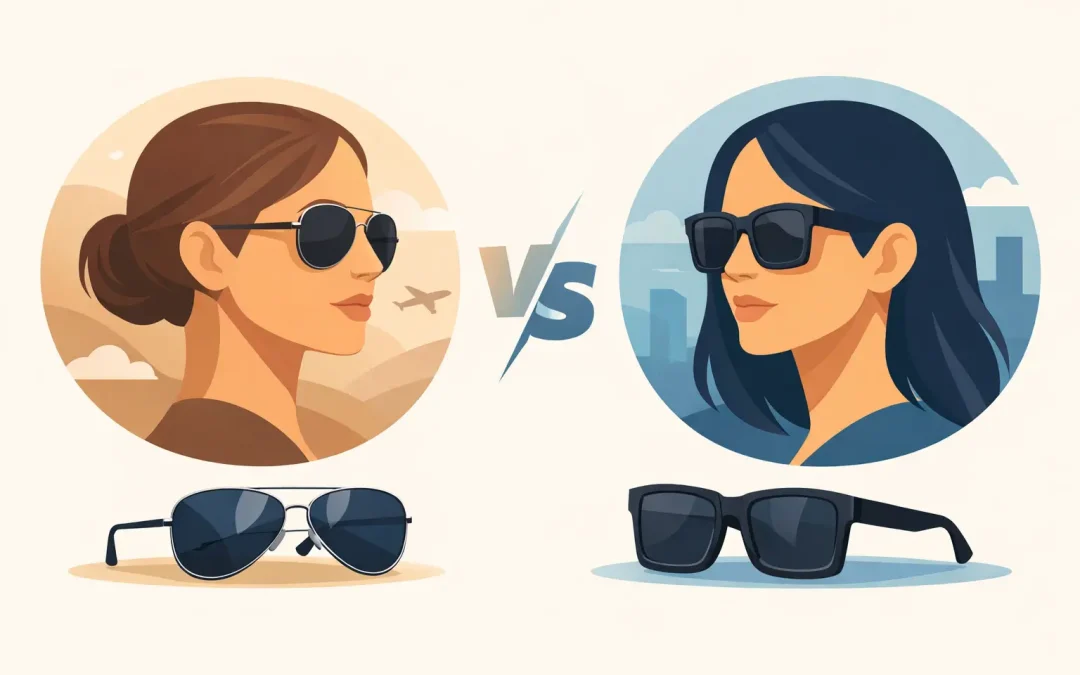
A pair of sunglasses can change the whole feel of an outfit before you even leave the house. In the aviator versus square sunglasses debate, the right choice comes down to more than what is trending. Frame shape affects how your features look, how much coverage you get, and whether your shades feel at home on a beach drive, a city walk, or a weekend ride.
Aviators bring an easygoing, iconic edge. Square sunglasses feel sharper, bolder, and more structured. Both can look great, especially when they pair a flattering frame with polarized lenses and dependable UV protection. The better pick is the one that suits your face, your wardrobe, and the way you spend time outside.
Aviator Versus Square Sunglasses: The Quick Difference
Aviator sunglasses are recognized by their teardrop-shaped lenses, slim metal frames, and double bridge. Originally designed to give pilots wide visual coverage, they still offer a light, classic look that works across casual and dressed-up outfits. Their curves soften the face and create a relaxed, confident style.
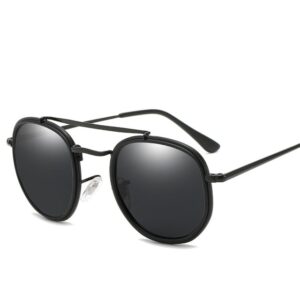
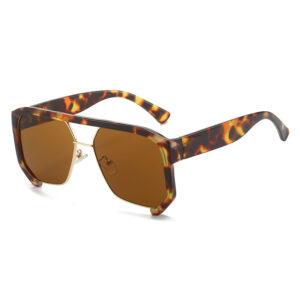
Square sunglasses use straight lines, angular corners, and a more defined silhouette. They can be oversized, chunky, slim, retro, sporty, or minimalist, but their visual effect is usually the same: they add structure. If you want sunglasses that make a simple T-shirt, denim, or tailored outfit look more intentional, square frames do that fast.
Neither style is automatically more fashionable. Aviators have lasting appeal because they never feel out of place. Square frames often make a stronger current-style statement, especially in black, tortoiseshell, clear acetate, or colorful finishes. Think of aviators as effortlessly cool and square sunglasses as confidently polished.
Choose by Face Shape, Not Just the Mirror Trend
Face-shape guidance is useful, but it is not a rulebook. Your hairstyle, brow line, cheekbones, and personal style all matter. Still, starting with contrast can make online shopping easier.
Round faces
Square sunglasses are often a standout choice for round faces. Their angles add definition and can make the face appear longer and more sculpted. Look for frames that are slightly wider than your face, with lenses that do not sit too low on the cheeks.
Aviators can work too, particularly in a more angular or slightly oversized design. Very round aviator lenses may emphasize softness, while a classic teardrop lens with a defined brow bar creates better balance.
Square and angular faces
Aviators are a natural match for square faces because their curved lenses soften a strong jawline and broad forehead. A thin metal aviator feels especially light and balanced, while a larger retro aviator adds coverage without making the features look harsher.
Square frames are still possible, but fit matters. Choose a frame with softened corners, a wider profile, or a slightly curved front. An ultra-boxy, narrow style can overemphasize angular features if that is not the look you want.
Oval faces
Oval faces have room to play. Both aviators and square sunglasses generally fit well because the face is already balanced in length and width. This is a great face shape for trying oversized square frames, bold colors, classic metal aviators, or modern flat-top styles.
The main detail to watch is proportion. If your features are delicate, a giant frame can overwhelm them. If your face is larger or longer, a small, narrow frame may look undersized.
Heart-shaped faces
Aviators often flatter heart-shaped faces because the lenses are wider at the top and narrower toward the bottom. That shape can balance a broader forehead and draw attention gently downward. Lightweight metal frames and softer lens colors are especially easy to wear.
Square sunglasses can also look fantastic when they are not too heavy across the brow. Try medium-width frames with thinner rims, rounded edges, or a lighter color instead of a thick, dark blocky design.
Style Is About the Statement You Want to Make
Aviators are made for versatility. They look right with a bomber jacket, a linen shirt, a swimsuit, or everyday denim. Gold frames and brown lenses lean warm and vintage. Silver frames with gray, green, or mirrored lenses feel cleaner and sportier. If your wardrobe changes from weekday errands to travel days without much effort, aviators keep up.
Square sunglasses create more visual impact. Black square frames can give even a basic outfit a crisp, editorial finish. Tortoiseshell brings a classic, relaxed character, while transparent frames and bright colors add a playful fashion twist. They are also a strong choice when you prefer sunglasses that are noticed rather than simply blended into your look.
For a more gender-neutral approach, both styles are easy to wear. Frame width, bridge fit, and lens size usually matter more than a label. Choose the proportions that feel right on your face, then let color and material reflect your style.
Coverage and Comfort Matter on Bright Days
Frame shape changes how much light reaches your eyes from the front and sides. Aviators usually offer generous lens height, which is useful for driving, travel, and open outdoor spaces. Their curved lower lens shape can provide broad coverage without looking overly sporty.
Square sunglasses vary more. An oversized square frame can give excellent sun coverage and strong protection around the eye area. Smaller, narrow square frames may be more fashion-focused and leave more of the face exposed. If you spend long afternoons at the beach, behind the wheel, or outside at a game, look beyond the silhouette and check the actual lens size.
Comfort comes down to fit. Metal aviators often feel lighter, and adjustable nose pads can help you fine-tune their position. They are a smart option for lower nose bridges or anyone who struggles with frames sliding down. Acetate square frames may feel more substantial and secure, but they need the right bridge width and temple fit to avoid pressure behind the ears.
A good pair should sit comfortably without pinching, sliding, or resting on your cheeks when you smile. If your lashes touch the lenses, the frame may sit too close. If the temples flare far beyond your face, try a narrower width.
Pick Lens Features for How You Actually Use Sunglasses
A great frame gets attention, but the lenses do the daily work. For sunny conditions, prioritize sunglasses with UV protection that helps shield your eyes from harmful UVA and UVB rays. Darker lenses alone do not guarantee protection, so choose based on the protective lens specification, not just the tint.
Polarized lenses are a particularly smart upgrade for drivers, beach days, water activities, and outdoor sports. They help reduce harsh reflected glare from roads, water, sand, and other flat surfaces. Colors can look richer and details may feel more comfortable to see in bright conditions.
Lens color is personal, but it can support your routine. Gray lenses keep colors more natural. Brown and amber lenses can add warmth and contrast, making them popular for driving and changing light. Green lenses offer a balanced, classic look. Mirrored lenses bring extra style and can feel useful in intense sun, though the protection still depends on the lens construction underneath.
When Aviators Are the Better Buy
Choose aviators when you want a lighter, classic frame with broad everyday appeal. They are an easy answer if your face has strong angles, if you prefer curved silhouettes, or if you want sunglasses that move smoothly from road trips to patio lunches. They also make a strong first pair because they rarely feel tied to one season or outfit category.
Aviators may be less ideal if you dislike nose pads, prefer a bold acetate look, or want a frame that adds more sharpness to soft features. Some people also find that very large aviator lenses sit too close to their cheeks, so checking measurements matters.
When Square Sunglasses Are the Better Buy
Choose square sunglasses when you want crisp definition, a more fashion-forward finish, or an easy way to balance rounder facial features. They are ideal for shoppers who like a substantial frame, vintage-inspired styling, or clean modern lines. Oversized square frames are also a great option for those who want more dramatic coverage.
They may not be the best choice if the frame is too narrow for your face or too heavy for all-day wear. The solution is not to avoid square shapes altogether. It is to choose softer corners, lighter materials, or a medium-size profile that feels natural from morning to sunset.
The best sunglasses are the ones you reach for without thinking. Whether you go for the laid-back curve of an aviator or the clean edge of a square frame, choose a comfortable fit, UV-protective lenses, and a look that makes you feel sharp the second you put them on. Shade your world in style, and let your everyday plans decide the frame.